


Volunteer in a Research Study
The Fralin Biomedical Research Institute at VTC offers a range of opportunities for participating in research studies aimed at improving our understanding of the human brain. These studies, all of which are compensated, take place in the Institute's state-of-the-art facility at 1 or 2 Riverside Circle in Roanoke, Virginia.
Many of these studies involve functional magnetic resonance imaging, or fMRI, a noninvasive technique that does not cause discomfort. Unlike x-rays and CT scans, fMRI does not involve exposure to any radioactive material.
A sampling of studies appears below. To schedule an appointment or to learn more, please use the contact information provided below for the specific study or studies in which you are interested in participating.
What is a research study? A research study is an organized way of learning more about a problem or answering a question. Our research studies use interviews, computer tasks, and functional MRI to understand how the brain makes decisions. Getting an MRI is standard, completely non-invasive, and not painful.
Are there benefits to participating in research? There may or may not be a direct benefit to you if you take part in our studies. The study may not help you personally, but your participation will provide information that is expected to improve the lives of others in the future and further our understanding of how the brain works. Research volunteers often tell us that they learn a lot about themselves and the research process by participating in our studies.
What does participation involve? In our studies, we will first ask you some questions to determine whether you are appropriate for each part of the study. If you are eligible, you will complete a series of questionnaires and interviews about your current and past mental and physical health. During the fMRI visit, you will play simple computer games as your brain activity is recorded. Depending on the specific study, your participation may take one or more visits to the lab. Before you enroll, the study coordinator will let you know how long your participation is expected to last.
Why do people choose to participate? People choose to participate for many reasons. For example, some hope to learn about the research process, some want to help researchers understand how the brain functions, and some want to be part of advancing knowledge and treatments of conditions that have affected themselves or their loved ones. Thanks to help from volunteers, we are able to achieve these goals.
What is informed consent? Informed consent is the process of learning the key facts about a research study before you choose whether or not to volunteer. During the consent process, our staff will explain the procedures of the study, how participation might affect you, and your rights as a research volunteer. Our research staff will answer any questions you may have and also ask you to read an "informed consent form" that goes over these details. If you choose to participate, we will ask you to sign the informed consent form.
Will I be compensated? Participants are always compensated for their time in our studies, and the rates vary depending on the study. Also, you will receive a copy of your brain on CD the first time you come in for a scan.
Who can participate? Most of our studies have requirements that must be met in order for you to participate. These requirements are designed to keep you safe and ensure that we can use the data. Some studies have broad requirements such as being over a specific age. Other studies have a more focused requirement, such as having certain life experiences. In general, to participate in fMRI studies, you must NOT have any metal implants (e.g., pacemakers, surgical clips), be claustrophobic, or have a serious medical condition (e.g., cancer, seizure disorder).
Who will see the results of the study? We take your privacy very seriously, and we will never identify you individually in discussing the results from the study. Any results that are presented to the community will be completely de-identified and are usually presented as group averages. We are happy to share these results with you. Only if you give us permission, examples from your experiences may be used to teach future clinicians and researchers.
What if I do not want to participate? Participation is always voluntary. You can change your mind at any time and leave any of our studies without adverse consequences.
The Human Neuroimaging Laboratory accepts volunteers interested in being added to the general recruitment pool for a range of research studies related to human cognition and decision-making.
- Eligibility: Healthy adults aged 18 to 64
- Primary goal: To advance human brain research through behavioral and fMRI studies
- Institute Sponsor: Human Neuroimaging Laboratory
- Compensation: varies by study
To volunteer: Visit Subject Sign Up, email us, or call 540-526-2034
Are you pregnant or the biological mother of a newborn? The Howell Lab is looking for healthy infants ranging from birth to 2 months of age to participate in our study examining infant brain development.
Eligible infants and their mothers will be asked to come in for at least four visits over the course of two years. Infants may be eligible if they were born between 32-42 weeks of pregnancy with no major complications and have no significant health conditions.
Participation may involve:
- MRI Scanning (a safe, a non-invasive imaging tool)
- Behavioral Assessments (resembles games and playing)
- Remotely accessed via Zoom
- FBRI visit when the child is 12 and 24 months (can be changed depending on situation)
- Home Collection of Infant Fecal Samples
- Home Collection of Breast Milk (if mother is currently breastfeeding)
- Online Surveys (can be completed at home)
Visits should take 40 minutes to 2 hours each. At each time point, participants may be compensated between $40-160 ($410-750 over the two year study period), depending upon the level of involvement.
For more information or questions, visit www.howellmindlab.org, call us at 540-526-2062, or e-mail us at mindlab@vtc.vt.edu.
By tapping the insights and experiences of people who are in recovery from an addiction—whether to tobacco, alcohol, drugs, or a harmful behavior—the International Quit & Recovery Registry seeks to further scientific understanding of recovery and to inspire those struggling with addiction. Participation in the registry involves an online registration process, which includes a brief questionnaire about the individual's recovery process. Participants are also encouraged to share their success stories.
Interested in participating in taste research?
The Center for Health Behaviors Research at the Fralin Biomedical Research Institute at VTC, located in Roanoke, is conducting a 5-week research study in which participants will taste several flavors, drink flavored beverages, and have their blood sugar levels measured.
Participants will:
- Complete a prescreening survey.
- Taste and rate several flavored beverages.
- Drink flavored beverages, that we provide, at home.
- May have an MRI scan of their brain and receive a copy of their brain scan.
- Be compensated up to $255 for participation in a tasting session, 3 blood draw sessions, 3 energy expenditure sessions, and one fMRI scanning session.
If interested in participating:
- Email us at dife_lab@vtc.vt.edu.
- Call 540-526-2174 and speak with research staff.
- Go to this website and complete the screening survey.
IRB # 19-927
Interested in participating in research on energy expenditure?
The Center for Health Behaviors Research at the Fralin Biomedical Research Institute at Virginia Tech Carilion, located in Roanoke, is conducting a research study in which participants will undergo 2 different types of measurements of metabolic rate and drink flavored beverages or consume foods. Your involvement may last between 2-12 weeks.
Participants will:
- Complete a prescreening survey.
- Choose the number of beverages/foods and metabolic tests in which they would like to participate (up to 6 beverages or foods and 12 tests)
- Drink flavored beverages or eat foods while undergoing measurements of metabolic rate
If interested in participating:
Email us at dife_lab@vtc.vt.edu.
or
Call 540-526-2174 and speak with research staff.
or
Complete the prescreening survey here.
Do You Drink Alcohol? Are You Interested in Cutting Back?
You may be eligible to earn up to $470 in a compensated 3-session research study! If you are interested, please complete the screen online at vtcri.info/screen to learn if you are eligible.
Please note that this is not a treatment study.
Participation involves:
- Computerized assessments
- fMRI scan
- Self-administration of alcohol
- Questions on drug and alcohol use
Eligibility criteria include:
- Adults 21 years old and older
- Availability to participate in Roanoke once per week for three consecutive weeks
- Meeting all MRI safety qualifications
Additional travel compensation and transportation arrangements for the alcohol self-administration session will be provided as needed.
For more information, please call (540) 315-0205 or contact the research team at arrc@vtc.vt.edu.
Do you smoke cigarettes?
Volunteers ages 21-65 needed for a 2-session confidential cigarette smoking study.
This is not a treatment study.
Participation involves:
- Screening questions
- Sessions last 1-2 hours
- Computerized questionnaires
- Purchasing tasks
- Females who are able to becomepregnant and are: pregnant,lactating,or not willing to usecontraceptives are excluded.
- Flexible scheduling
- Transportation compensation available
- Compensation up to $87
Call or email for more information, or screen online today!
- (540) 315-0205
- arrc@vtc.vt.edu
- vtcri.info/screen
The Legon Lab at Fralin Biomedical Research Institute at VTC is recruiting volunteers for a cutting-edge brain research study. If eligible, participants will take part in a multi-session study involving a magnetic resonance imaging (MRI) scan, a computed tomography (CT) scan, low-intensity focused ultrasound (LIFU), testing consisting of heating and cooling sensations on the skin, and questionnaires.
Primary goal: To investigate the effects of low-intensity focused ultrasound (LIFU), a non-invasive brain stimulation method, on pain management.
Who is eligible?
- Healthy adults aged 18-65
- Availability to participate in Roanoke for a multi-session study
- Meets all MRI and CT safety qualifications
How much time will it take?
Each session will take about 2-2.5 hours for a total of about 11.5 hours. Additional optional sessions will be 2-2.5 hours, up to an 9 additional study hours.
How will I be compensated?
Participants will be compensated between $250 and $410 depending on study participation.
Still have questions? Contact us.
Ready to volunteer? Complete this form.
The Legon Lab at the Fralin Biomedical Research Institute at VTC is seeking volunteers to participate in cutting edge research investigating different settings of low-intensity focused ultrasound (LIFU). LIFU is a noninvasive brain stimulation method. This study will involve multiple sessions over a few weeks which will include a magnetic resonance imaging (MRI) scan, a computed tomography (CT) scan, LIFU, transcranial magnetic stimulation (TMS), measurement of muscle contractions, and questionnaires.
Primary goal: To investigate different settings of low-intensity focused ultrasound (LIFU), a non-invasive brain stimulation method.
Who is eligible?
- Healthy adults aged 18-65
- Availability to participate in Roanoke for a multi-session study
- Meets all MRI and CT safety qualifications
How much time will it take?
Each session will take about 2.5 hours for a total of about 17.5 hours.
How will I be compensated?
Participants will be compensated approximately $360, depending on study participation.
(VT IRB 21-882)
Still have questions? Contact us.
Ready to volunteer? Complete this form.
The Legon Lab at the Fralin Biomedical Research Institute at VTC is seeking volunteers to participate in cutting edge research investigating different durations of low-intensity focused ultrasound (LIFU). LIFU is a noninvasive brain stimulation method. This study will involve multiple sessions over a few weeks which will include a magnetic resonance imaging (MRI) scan, a computed tomography (CT) scan, LIFU, transcranial magnetic stimulation (TMS), measurement of muscle contractions, and questionnaires.
Primary goal: To investigate different durations of low-intensity focused ultrasound (LIFU), a non-invasive brain stimulation method.
Who is eligible?
- Healthy adults aged 18-65
- Availability to participate in Roanoke for a multi-session study
- Meets all MRI and CT safety qualifications
How much time will it take?
Each session will take 2.5 to 3 hours for a total of about 20.5 hours.
How will I be compensated?
Participants will be compensated approximately $420, depending on study participation.
(VT IRB 21-892)
Still have questions? Contact us.
Ready to volunteer? Complete this form.
The Center for Health Behaviors Research at the Fralin Biomedical Research Institute at VTC, located in Roanoke, is conducting a 5-week research study to investigate how foods we eat influence our brains.
Qualifications
- Ages 18-45
- Willing to attend sessions at the Fralin Biomedical Research Institute in Roanoke
What is involved?
- All sessions in Roanoke
- Participants ages 18-45
- 5 in-person and 3 online sessions over 5 weeks (~18 hours total)
- Drinking sweetened drinks at specified times each week
- Measurements of energy use (metabolic rate)
- IV blood draws
- MRI brain scan
What you will get
- Up to $420
- Health information, including:
- Hemoglobin A1C test results
- Fasting blood sugar results
- Metabolic rate test results
- An MRI picture of your brain
IRB #23-297
The Center for Health Behaviors Research at the Fralin Biomedical Research Institute at VTC, located in Roanoke, is conducting a 3-9 week research study in which participants will eat various meals, and have their blood sugar and metabolic rates measured.
For this study, participants will:
- Participate in up to 3 meal conditions for ~2 weeks each
- Consume foods while undergoing measurements of metabolic rate and having blood drawn
- Undergo an fMRI scan
Participants will be compensated up to $590 for participation.
- If interested in participating, you can:
Go to tinyurl.com/nffctu3w and complete the screening survey. - Email us at dife_lab@vtc.vt.edu.
- Call 540-526-2174 and speak with research staff.
IRB: #21-1052
The Legon Lab at Fralin Biomedical Research Institute at VTC is recruiting volunteers for a cutting-edge brain research study. If eligible, participants will take part in a five-session study involving magnetic resonance imaging (MRI) scans, a computed tomography (CT) scan, low-intensity focused ultrasound (LIFU), and questionnaires.
Primary goal: To investigate the effects of low-intensity focused ultrasound (LIFU), a non-invasive brain stimulation method, on brain signals
Who is eligible?
- Healthy adults aged 18-65
- Availability to participate in Roanoke for a multi-session study
- Meets all MRI and CT safety qualifications
- Not pregnant
- No known neurologic disorder, history of neurologic disorder, or history of drug dependence
How much time will it take?
Each session will take 2 to 3 hours for a total of about 12 to 14.5 hours.
How will I be compensated?
Participants will be compensated between $250 and $300, depending on study participation.
(VT IRB 22-247)
Still have questions? Contact us.
Ready to volunteer? Complete this form.
Explore your mind, see your brain, and help advance health research
Virginia Tech scientists are recruiting teenagers, ages 13 to 14.5, in Southwest Virginia to participate in a multi-year brain research study. The research will be conducted at the Fralin Biomedical Research Institute in Roanoke, Virginia.
Teenagers enrolled in the research study will visit the Fralin Biomedical Research Institute in Roanoke, Virginia each year for three years. During each visit the volunteers will receive a brain scan using functional magnetic resonance imaging (MRI). These safe, non-invasive scanners use powerful magnets to detect blood oxygen levels – an indirect measure of neural activity that helps the researchers see which brain regions are engaged during decision-making tasks.
The study participants will be asked to play computer games, participate in interviews, and fill out surveys about themselves. All information shared with the study staff will be kept confidential. The study can be completed comfortably in 1 or 2 visits (totaling about 5-7 hours) at each timepoint over the 3-year period.
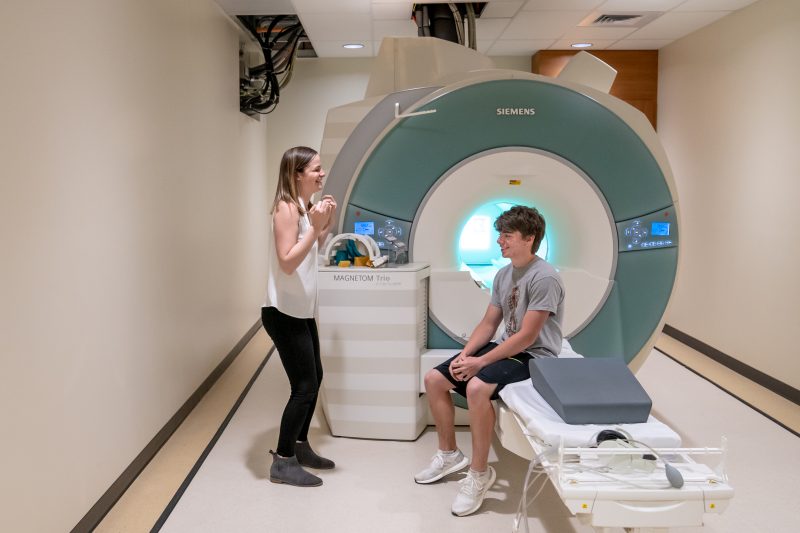
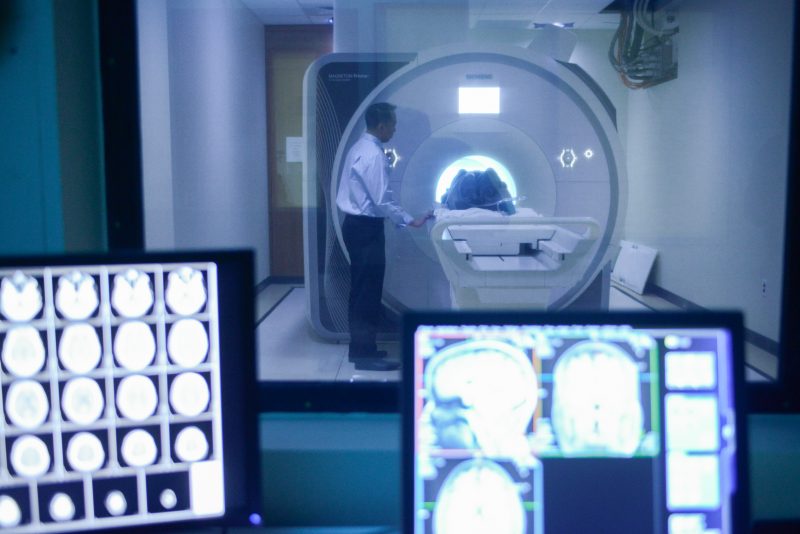
Participants will be compensated for their time at a rate of $20/hour for tasks completed outside the MRI scanner and $25/hour for tasks completed inside the scanner, plus up to an additional $30 based on task performance. Travel to the Fralin Biomedical Research Institute will be compensated at $20/hour. Transportation, or transportation assistance, is also available if needed.
The researchers will use a combination of a safe and non-invasive imaging technique called functional magnetic resonance imaging (MRI) to look at your brain. X-rays and CT scans are not used.
What is fMRI?
MRI machines use powerful magnets to rotate protons in your body's water molecules, allowing scientists to visualize structures in your brain and measure blood flow. Volunteers lie inside the MRI while their brains are scanned. Read more about fMRI
Researchers at Virginia Tech want to understand the brain's role in how teenagers make decisions. Dr. Pearl Chiu and Dr. Brooks Casas received funding from the National Institutes of Health to conduct this research.
Interested in learning more?
Please contact us with any questions you have, and submit a volunteer form. A research team member will follow-up with you after your form is submitted.
Do you...
Drink alcohol?
Feel down or blue?
Worry much of the time?
If these questions describe you, please call to see if you qualify to participate in a brain imaging study (VT IRB #20-1032) at the Fralin Biomedical Research Institute at VTC located at 2 Riverside Circle, Roanoke, Virginia.
The Chiu Lab is conducting a research study to understand how people with and without a range of difficulties process different kinds of information. By looking at a person’s brain while they play games, we can begin to understand how they make decisions. The decisions that a person makes while playing games can tell us about how a person might make decisions in real life and what brain functions are used in the process. The goal of this research is to understand when and how social connections affect mental and physical health.
Participants may be asked to engage in interviews and questionnaires about behaviors and life experiences. Eligible participants may also undergo functional magnetic resonance imaging scanning sessions (fMRI) where they will play decision-making games. MRI is a standard non-invasive scanning procedure that is FDA approved. This study is expected to take place over 4 visits over 1 year. Visits may include interviews (2-3 hours) and/or scanning (1-2 hours), for up to a total of 12 hours.
At each study timepoint, the study team may collect biological samples from participants. These samples may include the collection of urine, breath, and/or saliva samples.
Participation also includes:
- For the time and effort you put toward this study, you will be compensated $20/hour
- During the scanning portion of this study, you will have the opportunity to earn up to an additional $40 based on performance in the games
- Travel time will be compensated at the rate of $20/hour for participants residing outside of Roanoke City (for visits in Roanoke)
- An opportunity to receive an MRI brain scan
- An opportunity to receive a CD and a printed image of your brain
You may be eligible to participate if you:
- Are 25-50 years old
- Are NOT claustrophobic
- Do NOT have any metal implants (e.g. pacemakers, cochlear implants, spinal fusion)
- Have NOT had a head injury (e.g. loss of consciousness exceeding ten minutes, TBI)
Interested in learning more?
Please contact us today to see if you qualify. You can complete a simple form to express your interest in this study. You'll be contacted soon by one of our research coordinators.
Or call or email if you have questions. Thank you.
Are you feeling down or blue?
Have you lost interest or pleasure in things you used to enjoy?
Do you worry most of the time?
If these questions describe you, please call to see if you qualify to participate in a brain imaging study at the Fralin Biomedical Research Institute at VTC located at 2 Riverside Circle, Roanoke, Virginia.
The Chiu Lab is conducting a research study to understand how feelings related to depression or anxiety may affect how the brain makes decisions. By looking at a person’s brain while they play computer games, we can begin to understand how they might make decisions in real life and what brain functions are used in the process. The study is also interested in how behavioral training or psychotherapy may impact decision-making.
This study is expected to take place initially across multiple weeks. Participants will engage in interview/questionnaire sessions (2-3 hours) and scanning sessions (1-2 hours) at two different time points (first and last session). Participants will make choices between two stimuli while undergoing a Functional Magnetic Resonance Imaging Scan (fMRI), which is a way to take pictures of the brain’s activity. While in the fMRI scanner, participants will be asked to play simple computer games by responding to pictures on the computer screen and using button response boxes held in their hands. MRI is a standard non-invasive scanning procedure that is FDA approved.
Apart from the fMRI and interview sessions, study procedures include randomly assigned participation in behavioral training (across 4 weeks) or psychotherapy (across 12 weeks) for up to 12 sessions. The study team may also collect biological samples from participants. These samples may include urine, breath, and/or saliva samples. Additionally, participants may be invited for three follow-up sessions that are scheduled three, six and twelve months after these initial study procedures are complete.
Participation also includes:
- Being compensated $20/hour and having an opportunity to earn up to an additional $15 based on performance in the games
- Travel time will be compensated
- An opportunity to receive an MRI brain scan
- An opportunity to receive a CD and a printed image of your brain
You may be eligible to participate if you:
- Are 25-50 years old
- Are NOT claustrophobic
- Do NOT have any metal implants (e.g. pacemakers, cochlear implants, spinal fusion)
- Have NOT had a head injury (e.g. loss of consciousness exceeding ten minutes, TBI)
Interested in learning more?
Please contact us today to see if you qualify. You can complete a simple form to express your interest in this study. You'll be contacted soon by one of our research coordinators.
Or call or email if you have questions. Thank you.
Virginia Tech is conducting a paid brain imaging study of cigarette or e-cigarette users. Contact us to see if you qualify!
You may be eligible if you are:
- Age 21 to 55
- A cigarette or e-cigarette smoker
- Not trying to quit
- Willing to abstain for at least 8 hours
What you will do if eligible:
- Visits to the the institute each last 2-4 hours, scheduled at your convenience
- Complete tasks while in an MRI scanner, answer questions, play games, collection of biological assays (e.g., breath samples)
Compensation:
- $20/hour for initial visit and travel
- $25/hour for 3 MRI visits
- $50 study completion bonus
- Free copy of your brain scan
Interested in learning more?
Please contact us today to see if you qualify. You can complete a simple form to express your interest in this study. You'll be contacted soon by one of our research coordinators.
Or you can call or email us if you have questions. Thank you.
The HEALthy Brain and Child Development Study
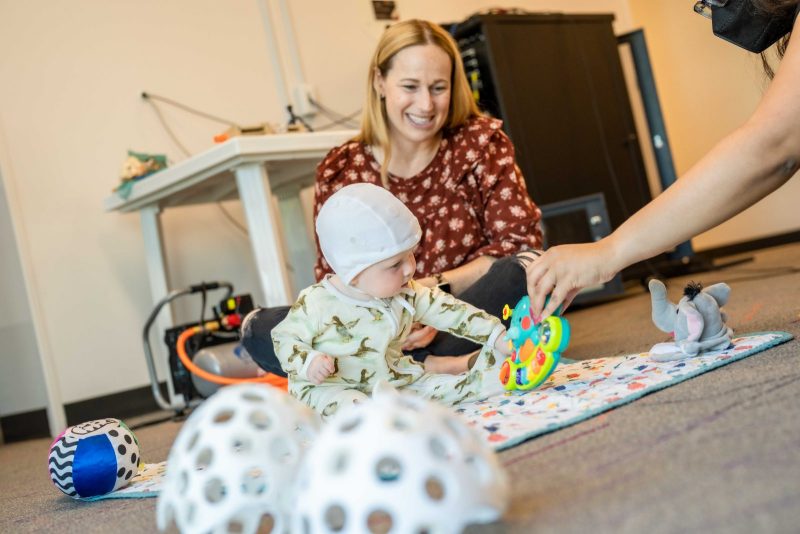
The HEALthy Brain and Child Development Study is looking for pregnant individuals who want to contribute to research on child development. The HBCD Study will look at the role of genes on development and behavior of children, the impact of exposure to substances during pregnancy, how your behavior affects child development, and so much more!
Eligibility: You must be currently pregnant and live in central or southwest Virginia
Contact information: hbcd@vt.edu

Participate in a Type 2 Diabetes Study
The Center for Health Behaviors Research at the Fralin Biomedical Research Institute at VTC is recruiting adults with Type 2 diabetes for a 6-month remote research study. This study is to help individuals lose weight, adopt healthy lifestyle, and study the most effective motivational strategies for successful weight loss.
Remote participation involves:
- Dietary and lifestyle coaching
- Behavioral Intervention and a 90-minute average weekly commitment
- Zoom assessments of blood sugar, diet, medication use, physical activity, and decision making
Participants receive:
- Access to a weight loss treatment program
- $260 compensation for completion of all study procedures
See if you are eligible! Screen online at: https://redcap.vtc.vt.edu/surveys/?s=93HWTEW9J8&recruitment_source=CHBR&site=chbr_website
Contact us if you have any questions: Phone: (540) 525-7805 or Email: healthyhabits@vtc.vt.edu
Contact
Planning a visit to the Fralin Biomedical Research Institute and need more information? Trystin Davis will assist you.
-
Bio Item
 Trystin Davis , bio
Receptionist / Research Participant Volunteer Coordinator